

Beyond Rarity: Joanna Wu on Investment-Grade Gemstones, the Art of Collecting and the Soul of a Stone
20 June 2026
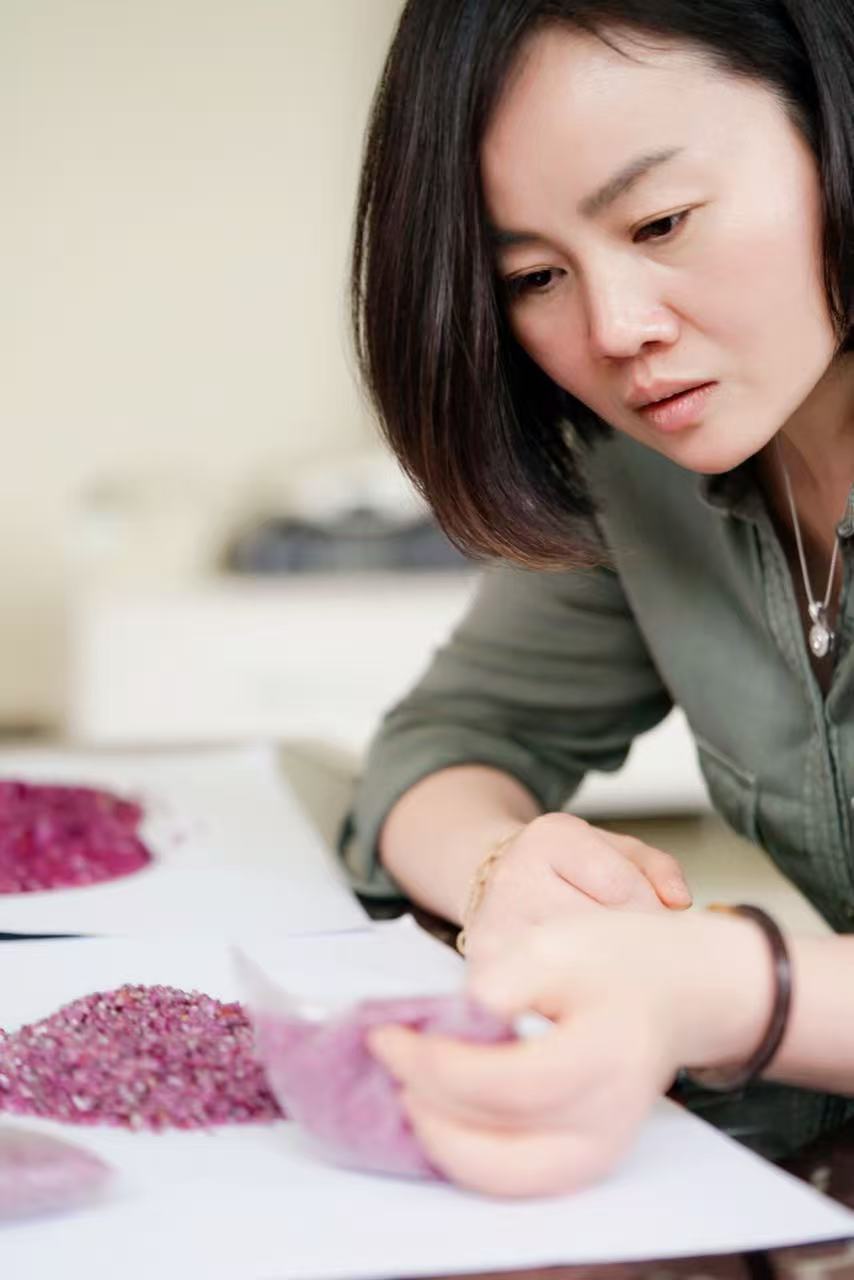
ShareJoanna Wu is a GIA Certified Gemologist with over 20 years of experience in the international coloured gemstone industry. Her expertise focuses on investment-grade gemstones, including Burmese rubies, Colombian emeralds and Kashmir sapphires, supported by extensive global sourcing and field research across some of the world’s most historic mining regions, including Myanmar and Sri Lanka.
Alongside her gemstone expertise, Joanna has spent the past five years specialising in museum-quality antique jewellery and advisory, with a particular focus on historically significant European pieces. Her personal collection includes works by Castellani, Fabergé, Cartier and Tiffany & Co.
Bridging gemological expertise, historical scholarship and contemporary aesthetics, Joanna brings a rare perspective shaped by both academic research and decades of market experience.
1. Your work sits at the intersection of gemology, history, and collecting — how do you assess a piece's value beyond its intrinsic material worth?
Intrinsic material value is the starting point of a piece and the foundation of all assessment. Beyond material value and gem rarity, I evaluate a work by analysing its craftsmanship (such as goldsmithing techniques), the social context behind its stylistic expression, and whether it carries a verified provenance narrative. I examine the precision of its metalwork, decode the social conditions reflected in its aesthetic, and trace the integrity of its chain of provenance. Every exceptional piece is a window into the artistic and craft movements of its era — embodying the aesthetic sensibility and artisanal spirit of its time. Gemstones and precious metals are merely the physical vessel; it is the weight of history and the mastery of craft that provide the true soul of a piece.
2. Investment-grade gemstones are attracting increasing attention — where is the distinction between a truly exceptional stone and one that is merely commercially popular?
The distinction comes down to three factors:
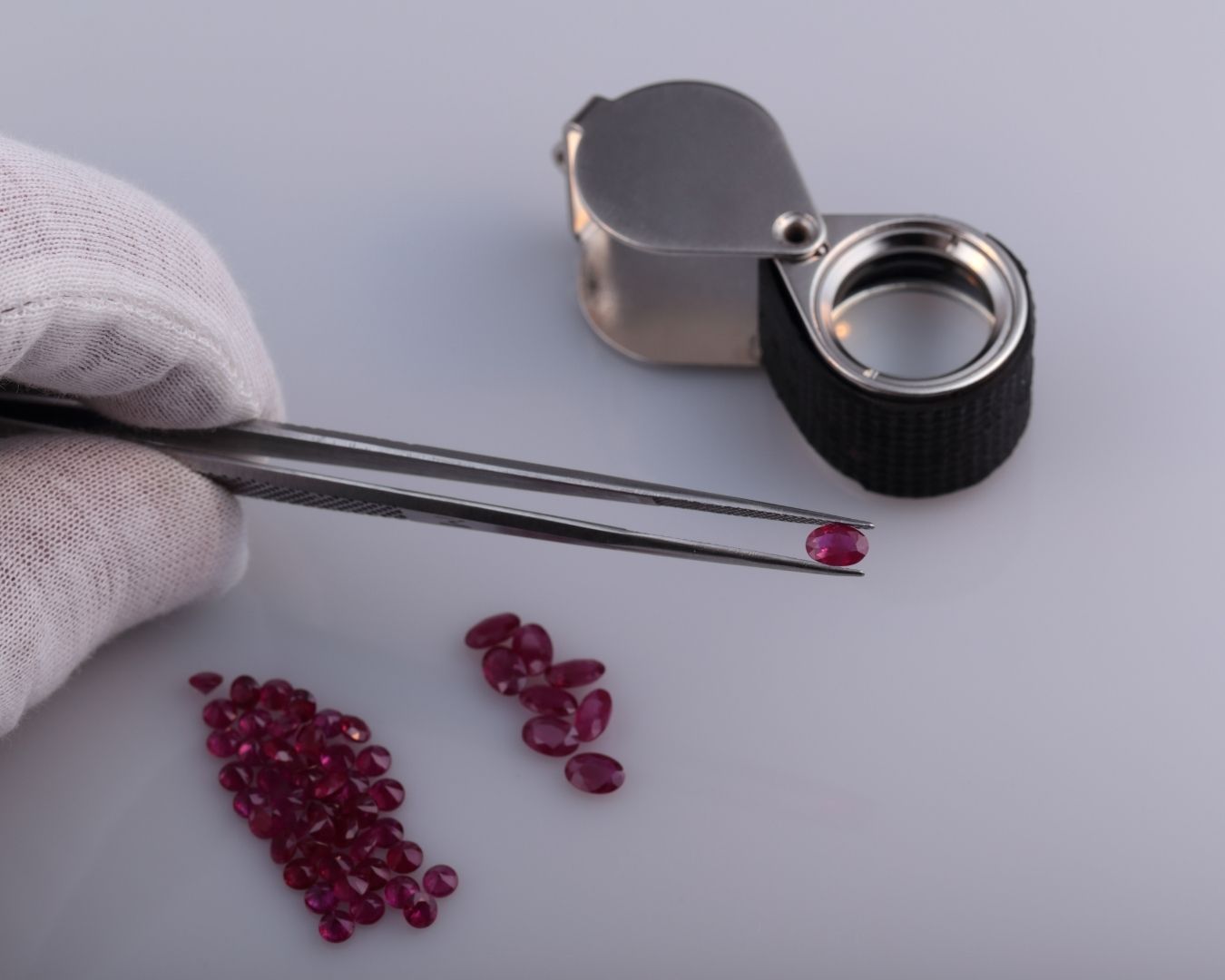
Scarcity: Commercial stones are available at any time; investment-grade stones are singular — the deposits are exhausted, and no amount of money can bring them back.
Untreated status: Commercial stones are commonly enhanced through human intervention (heat treatment, oiling); investment-grade stones demand no treatment — untreated status is the guarantee of value.
Authority: Commercial stones need only look beautiful; investment-grade stones require not just high quality and scarcity, but top-tier laboratory certification (such as SSEF or Gübelin) conferring the highest grades — such as Pigeon's Blood for rubies, Royal Blue for sapphires.
3. In your view, how do antique jewellery and unmounted stones compare as long-term collecting or investment vehicles?
Unmounted stones are a standardised asset — you are acquiring a scarce resource. The advantages are valuation transparency and strong liquidity; they are the cornerstone of an investment portfolio. Antique jewellery is an aesthetic artwork — you are acquiring history, craftsmanship, and legacy. The advantages are irreproducibility and vast potential for artistic premium; it suits collectors with a deep fluency in history and culture.
4. Your collection spans from Castellani to Fabergé — what draws you particularly to historically significant European works?
What draws me is what I would call the thickness of time.
Unparalleled craft: The granulation and filigree of Castellani, or the guilloché enamel and hardstone setting of Fabergé, represent skills now almost entirely lost — they mark a summit in the history of human artistry. Castellani revived the granulation and filigree of classical antiquity as an Archaeological Revival response to industrialisation; Fabergé brought guilloché enamel and hardstone setting to unrivalled refinement, underpinned by the ultimate aesthetic ambition of Imperial Russia.
Narrative depth: Every piece once accompanied a soul of its era, carrying with it the sensibility of its aristocratic moment. To wear one is not merely to adorn — it is to enter into dialogue with
an artist from a century past.
Absolute singularity: Contemporary jewellery can be produced on demand, but each of these pieces bears the indelible imprint of its age and exists as a singular surviving object — one the
industrial era can never recreate.
To collect antique jewellery is to collect not merely jewellery, but the civilisational spirit of Europe at its height — sealed within gold, silver, and stone. Each piece is a miniature monument to an
age that cannot be brought back.
5. In today's increasingly pluralistic aesthetic landscape, how do you balance historical integrity with contemporary taste when advising collectors?
The core of that balance is: draw from history, judge by beauty. Respect the historical core: Never compromise the structure or essential character of a piece to accommodate contemporary decorative preferences — historical integrity is the soul of its asset value. Elevate contemporary resonance: Through considered styling and modern presentation, reveal the resonance that antiques carry for a contemporary audience — allowing objects of another age to speak with fresh aesthetic force.
6. Are we witnessing a shift in how younger collectors approach gemstones and antique jewellery?
Clearly so. The core of the shift is a move from displaying wealth to narrating identity. The younger generation places far greater emphasis on sustainability and transparency. They demand transparency about a gem's mine of origin, the restoration history of antiques, and the ethics behind a brand. They are not simply purchasing an object — they are acquiring a history worth inheriting, one that aligns with their ethical convictions. For young collectors, gemstones and antiques are no longer simply instruments of wealth preservation — they have become a means of expressing personal taste and projecting a distinctive inner world.
7. Having worked in frontline mining regions and deeply within the trading market, where do you see the greatest opportunities in gem collecting today?
The core opportunity, in my view, lies in identifying undervalued origin premiums backed by top-tier laboratory certification, against the backdrop of depleting deposits and diverging asset
classes.
As well known traditional mining regions are exhausted, the market is moving away from name-driven buying toward a genuine reassessment of origin as a value in itself. The current opportunity sits in stones of the highest quality whose prices remain undervalued relative to their quality — simply because their origins have not yet been commercially amplified. Collectible fancy coloured sapphires — particularly padparadscha and star sapphires with direct mine-source provenance — fall into this category. The market's willingness to pay an origin premium has only just begun to emerge.
A second opportunity I would highlight is emeralds. Though the secondary market appears stable, that stability conceals the reality of increasingly depleted high-quality sources. The circulation of top-grade untreated or minimally treated stones (no oil to minor oil, per laboratory grading) is declining, and their resilience and long-term value trajectory are well understood among serious collectors. This quiet solidity — overlooked by the mass market — represents precisely the most strategically astute moment to enter.