

British Surrealism and Beyond: Treasures from Southampton City Art Gallery
19 June 2026
Share
By Sacha Peers - an independent writer and arts photographer
Surrealism burst onto the British art scene on 11th June 1936, when the International Surrealist Exhibition opened at London's New Burlington Galleries.
Led by the poet David Gascoyne and artist Roland Penrose, the show introduced over 390 works of surrealist painting and sculpture to an unsuspecting London public. Even before opening, the exhibition was surrounded by controversy and myth with a consignment seized by customs officials on the grounds of indecency. However, it was the opening itself that became legendary. Welsh poet Dylan Thomas reportedly wandered among guests offering cups of boiled string, asking, “Do you like it weak or strong?”, while Salvador Dalí collaborated with Sheila Legge on a surrealist ‘happening’ in Trafalgar Square; Legge appearing as the ‘Phantom of Sex Appeal,’ dressed in white with her face obscured by paper flowers and ladybirds.
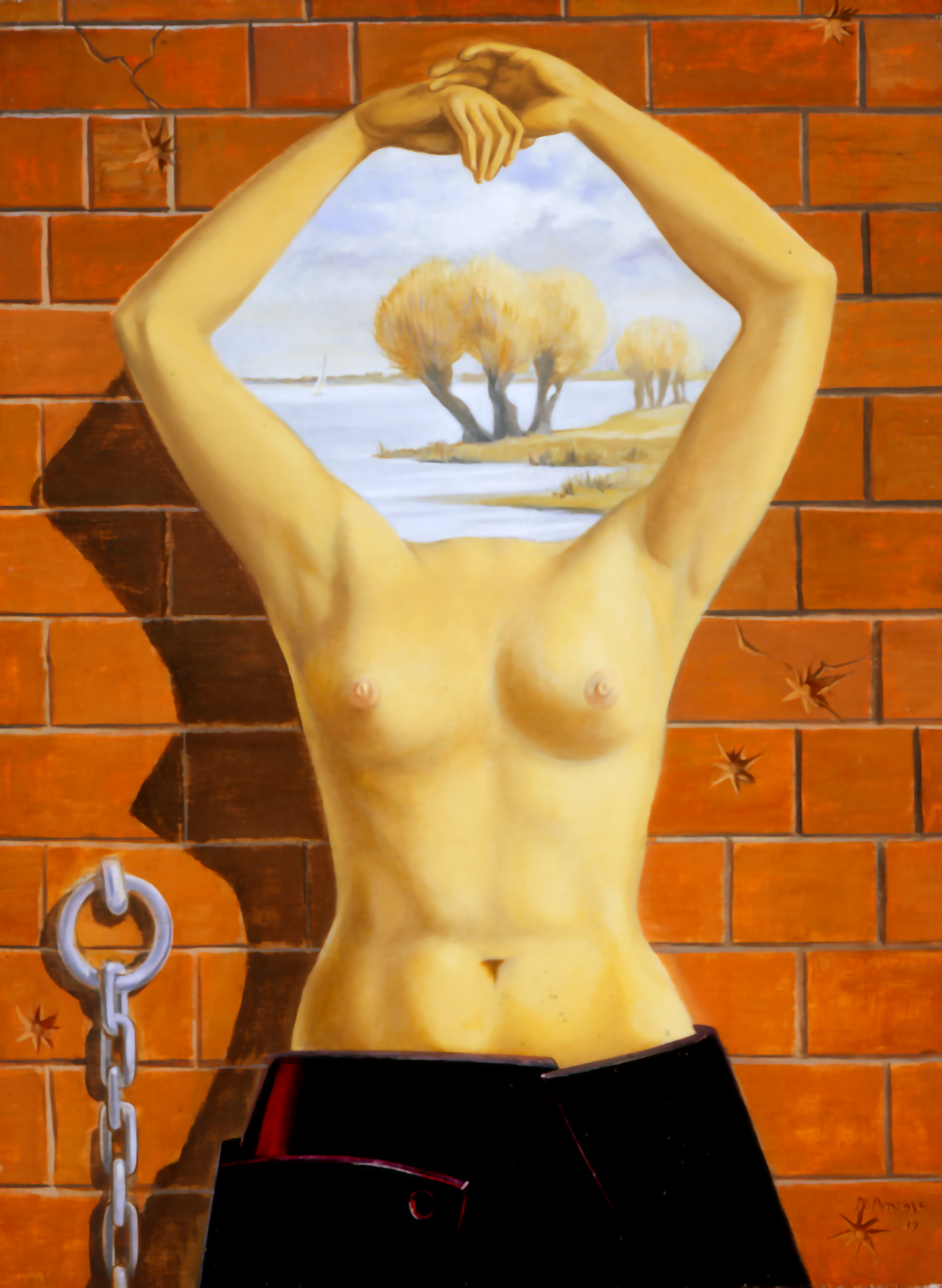 Roland Penrose, Good Shooting, oil on canvas, 1939.
Dalí’s own lecture was no less theatrical: he appeared dressed head to toe in a deep-sea diving suit, complete with diving-bell helmet that rendered his speech almost inaudible, holding two dogs on leads in one hand and a billiard cue in the other. As Dalí proceeded to give the lecture, it became apparent that he was slowly suffocating inside the diving bell, forcing an intervention by Gascoyne to prise the helmet off with the billiard cue. The general confusion was further compounded by his insistence on projecting slides upside down.
Despite, or perhaps because of such spectacle, the exhibition drew more than 23,000 visitors in three weeks and stopped the British arts establishment in its tracks, raising a reappraisal of what art could be.
Yet behind the theatrics lay serious intent. As organiser Herbert Read wrote, ‘Do not judge this movement kindly […] It is not just another amusing stunt. It is defiant—the desperate act of men too profoundly convinced of the rottenness of our civilisation to want to save a shred of its respectability.’ Artists, he argued, had until then only interpreted the world, ‘the point, however, is to transform it.’
And indeed, Surrealism left indelible marks on British culture. Its influence can be traced in the absurdist humour of Monty Python’s Flying Circus and beyond, where logic is gleefully upended and the everyday made strange.
Ninety years on, almost to the day, Treasure House Fair will celebrate that seminal show with a landmark exhibition of Surrealist works drawn from the distinguished permanent collection of Southampton City Art Gallery.
Paintings by Roland Penrose, a driving force behind the 1936 show, are joined by those of Paul Nash, whose deep attachment to the English landscape gave his Surrealism a distinctly British character. Alongside them are three trailblazing women artists whose contributions to the movement are only now receiving the recognition they deserve: Eileen Agar, Ithell Colquhoun, and Edith Rimmington. Agar being the only British woman included in the original 1936 exhibition. The display is completed by the Belgian-born Paul Delvaux, one of the most celebrated figures associated with the movement. As Treasure House returns to the grounds of the Royal Hospital Chelsea for its fourth edition, we hope to recall the spirit of the original show.
British Surrealism and Beyond: Treasures from Southampton City Art Gallery will be on display for the duration of Treasure House Fair, 25–30 June 2026, at the Royal Hospital Chelsea.
Surrealism burst onto the British art scene on 11th June 1936, when the International Surrealist Exhibition opened at London's New Burlington Galleries.
Led by the poet David Gascoyne and artist Roland Penrose, the show introduced over 390 works of surrealist painting and sculpture to an unsuspecting London public. Even before opening, the exhibition was surrounded by controversy and myth with a consignment seized by customs officials on the grounds of indecency. However, it was the opening itself that became legendary. Welsh poet Dylan Thomas reportedly wandered among guests offering cups of boiled string, asking, “Do you like it weak or strong?”, while Salvador Dalí collaborated with Sheila Legge on a surrealist ‘happening’ in Trafalgar Square; Legge appearing as the ‘Phantom of Sex Appeal,’ dressed in white with her face obscured by paper flowers and ladybirds.
Roland Penrose, Good Shooting, oil on canvas, 1939.Dalí’s own lecture was no less theatrical: he appeared dressed head to toe in a deep-sea diving suit, complete with diving-bell helmet that rendered his speech almost inaudible, holding two dogs on leads in one hand and a billiard cue in the other. As Dalí proceeded to give the lecture, it became apparent that he was slowly suffocating inside the diving bell, forcing an intervention by Gascoyne to prise the helmet off with the billiard cue. The general confusion was further compounded by his insistence on projecting slides upside down.
Despite, or perhaps because of such spectacle, the exhibition drew more than 23,000 visitors in three weeks and stopped the British arts establishment in its tracks, raising a reappraisal of what art could be.
Yet behind the theatrics lay serious intent. As organiser Herbert Read wrote, ‘Do not judge this movement kindly […] It is not just another amusing stunt. It is defiant—the desperate act of men too profoundly convinced of the rottenness of our civilisation to want to save a shred of its respectability.’ Artists, he argued, had until then only interpreted the world, ‘the point, however, is to transform it.’
And indeed, Surrealism left indelible marks on British culture. Its influence can be traced in the absurdist humour of Monty Python’s Flying Circus and beyond, where logic is gleefully upended and the everyday made strange.
Ninety years on, almost to the day, Treasure House Fair will celebrate that seminal show with a landmark exhibition of Surrealist works drawn from the distinguished permanent collection of Southampton City Art Gallery.
Paintings by Roland Penrose, a driving force behind the 1936 show, are joined by those of Paul Nash, whose deep attachment to the English landscape gave his Surrealism a distinctly British character. Alongside them are three trailblazing women artists whose contributions to the movement are only now receiving the recognition they deserve: Eileen Agar, Ithell Colquhoun, and Edith Rimmington. Agar being the only British woman included in the original 1936 exhibition. The display is completed by the Belgian-born Paul Delvaux, one of the most celebrated figures associated with the movement. As Treasure House returns to the grounds of the Royal Hospital Chelsea for its fourth edition, we hope to recall the spirit of the original show.
British Surrealism and Beyond: Treasures from Southampton City Art Gallery will be on display for the duration of Treasure House Fair, 25–30 June 2026, at the Royal Hospital Chelsea.