

Tangier: A Melting Pot or Something More?
19 January 2026
Share
Before the art world lands in Morocco for 1-54 Marrakech, we visit designers and architects Frank de Biasi and Gene Meyer to discover their design shop and inspiring home, nestled in the heart of Tangier's Medina.
by Michalina Franasik - THF Communications Manager, Writer and Photographer
There are places in the world one might never visit were it not for coincidence, a personal recommendation, or a compelling story. Tangier is one of those places. Situated just across the Strait of Gibraltar, the city is visible from the mountains of Andalusia in southern Spain. A vibrant crossroads of cultures, Tangier is a city of hills, sun-washed yellows, striking blues, and deep greens. Overlooking the city is the Kasbah (from the Arabic "Khabba"), home to the Museum of Contemporary Art and the Kasbah Museum. The city’s aesthetic charm lies in its traditional zellige mosaic tiles, intricate wooden doorframes, and flowing arabesque forms, all testaments to its rich artisanal heritage. But we’re not touring Tangier today. Instead, we’re stepping into the life and work of two celebrated designers, Gene Meyer and Frank de Biasi who run a shop and studio in the city centre,where they collaborate closely with local craftspeople. Welcoming me into their studio space, they shared the story of how they fell in love with the city, a journey that began in New York and led them to relocate their life and work to this extraordinary corner of the world.
THF: When you first visited Tangier, what about it immediately captivated you and inspired your design aesthetic? How have those influences evolved since you moved there permanently?
Gene & Frank: When we first came here in 2001, and then again in 2002, we visited the city with a friend who had once been Frank’s assistant in New York. Her mother owned a house in the old mountain area, so we had the rare chance to explore the city with someone local. We were immediately drawn to the colourful characters and the city’s eccentric cultural scene, even though, at the time, we were living between New York and Paris. It sounds wild to say that a place could offer more than New York, but for us, Tangier did. It felt different. It felt exciting. It felt like something new.
In the 20th century, Tangier became a true melting pot of cultures, largely due to its unique international status. From 1923 to 1956, Morocco was governed by a mix of international powers, giving Tangier a cosmopolitan and almost surreal atmosphere.
Gene & Frank: When we asked a Moroccan friend what they thought about this period, they said: “It was a strange and fascinating time, not without its complications, but it gave Tangier a kind of openness and artistic energy that’s still felt today.”
This energy attracted artists, writers, and musicians from all over the world, even The Rolling Stones spent time here. Many of them were escaping the chaos of big city life and searching for something more intimate, more inspiring.
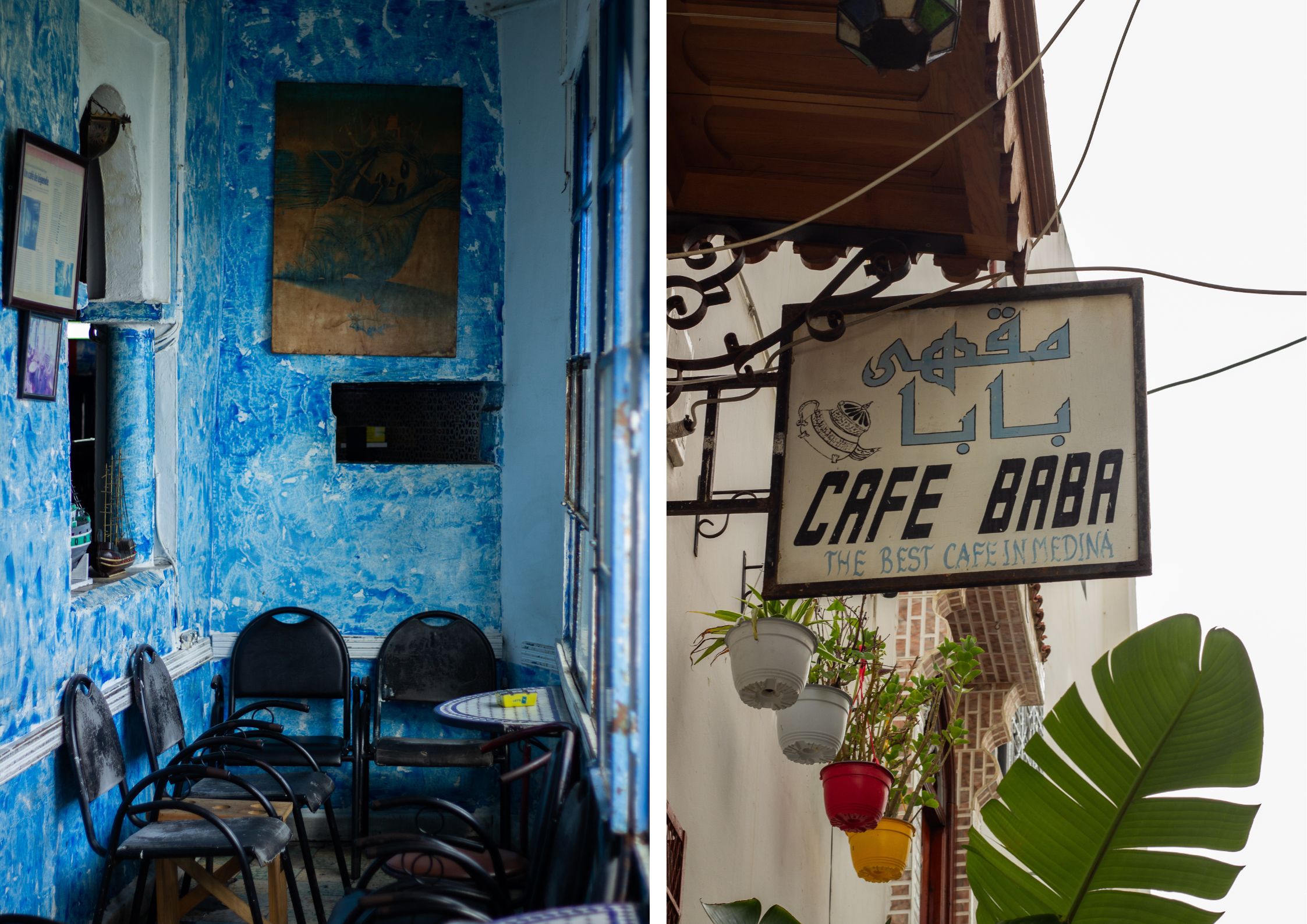 Café Baba — an iconic Tangier institution.
With every sip of sweet mint tea, you can almost smell the lingering cigarette smoke and hear the whispers of The Rolling Stones echoing through the walls.
Photo by Michalina Franasik
Gene & Frank: Tangier is also only a two-hour train from Casablanca and five hours from Marrakech, both important cultural hubs in their own right. European artists and designers often came through these cities, drawing inspiration and frequently giving back, buying and renovating homes, supporting local artisans and businesses. Just look at the legacy of Pierre Bergé and Yves Saint Laurent, who founded Jardin Majorelle in Marrakech, still one of the most breathtaking places, colour-wise, I’ve ever experienced. Sometimes I still dream about the contrast of that deep Klein Blue set against vibrant yellows and fiery oranges.
We met Pierre Bergé a few times; he was much older by then, but we were very fortunate, as close friends from New York rented Villa Mabrouka, which was initially purchased by Yves Saint Laurent and Pierre Bergé in 1997 and transformed into the “House of Luck,” with interiors designed by Jacques Grange — where they lived for seven years.
_T639045110491867420.jpg) Colours that inspired many, encountered on the streets | Photo by Michalina Franasik
Colours that inspired many, encountered on the streets | Photo by Michalina Franasik
Today, with the development of 1-54 Marrakech, the art fair continues to encourage people to experience its unique landscape firsthand. In the case of Tangier, Casablanca may have had a slightly greater influence, as it was home to the Beat Generation of creatives. This literary subculture intersected with the Casablanca School of painters, including figures such as Hassan Hajjaj and Mohammed Melehi, whose work continues to inspire artists to this day.
THF: All those historical influences can still be felt today, even though Tangier had, in some ways, faded from the spotlight over the past 20 years. Now it seems to be rediscovered again. What characteristic do you think Tangier has that cities like New York or Paris do not?
Gene & Frank: Having lived and run a business in New York for many years, we met countless creative and inspiring people. But when we first came to Tangier, we discovered something different, a small but devoted community of eccentrics, designers, and creatives, much like ourselves. Tangier is where the Mediterranean meets the Atlantic, and where Europe meets Africa. That convergence brings a depth of influence, of layered history, of overlapping identities, all of which fuel a unique kind of energy. You feel it in the conversations, the aesthetics, the way people live. During our first week in the city, we went to 6 events, all in one week, and met so many people who remain close friends to this day, even 20 years later.
One night, we wore traditional Moroccan caftans. We looked at each other and thought: “We’ve never felt more like ourselves, never felt more like we were in the right place.”
That moment sealed it. We knew we had fallen in love with Tangier and that we wanted to stay longer, maybe even permanently. To this day, we can't fully explain what exactly captivated us. Perhaps it was the rhythm of the place, the colours, the light, the sense of possibility. But one thing is certain: the incredibly warm welcome we received, from both the expat community and our Moroccan neighbours, played a huge part in making Tangier feel like home.
THF: You’ve undertaken two major house renovations in Tangier. How did the challenges of working from New York shape the renovation of your first house, and how did being in Tangier for the second one change the process?
Gene & Frank: We bought our first house in 2007. At the time, it was essentially just a shell, it had been used as a mosaic studio, so while the structure was good, there wasn’t much else in place. Since we were still living between Paris and New York, there was no urgency to finish it. We took our time, over 10 years, in fact, slowly renovating the space. I was still running my interior design firm in New York, so I had my team, architects and designers, draw up the plans. We sent them over, and the local craftsmen executed the work beautifully. The plaster workers, woodworkers, and metal artisans in Tangier are truly exceptional.
By 2018, the house was finally finished, and we decided to make the move from New York. We shipped over our furniture, which filled maybe 30 or 40% of the space. The rest were sourced locally, either made by hand or found through antique dealers in Fez and Marrakech. Then, in 2019, we had the opportunity to purchase the neighbouring houses. They were completely in ruins, just rubble. So we started from scratch and built an addition to our existing home, extending it in the same architectural style and continuing our aesthetic journey. The design of both homes reflects our personal style, a mix of collecting, travel, and our life experiences, but also draws deeply from Northern Moroccan design traditions. Living here and meeting people with incredible homes was hugely influential. We wanted a blend of Moroccan and Western influences, something that reflected the life we were used to, but rooted in the culture we were now immersed in.
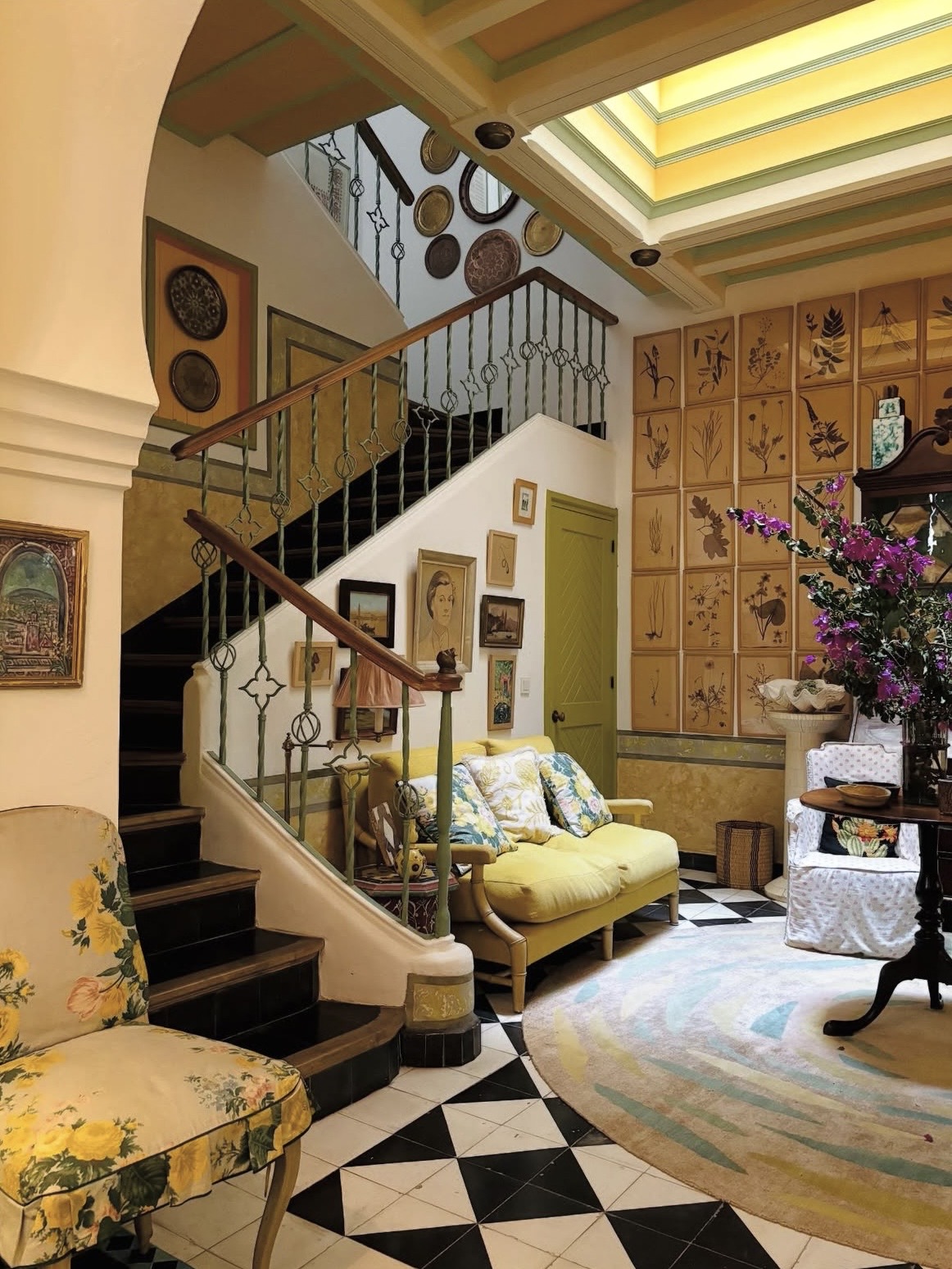
Frank's and Rene's home featured also in House & Garden, see more here.
Photo by Gene Meyer
The second renovation was much more Moroccan in spirit. By then, we had built relationships with local antique dealers, and we started incorporating antique ceilings, doors, window frames, tiles, everything we could find. It was a joyful process. If we had to pick favourite elements in our homes, we'd say two stand out: first, the fabrics, especially the embroidered ones we design and often create from scratch; and second, the painted woodwork.
THF: Can you share more about the vision behind Habibi Burton and how it reflects both your respect for traditional Moroccan craftsmanship and your desire to create a global brand?
Gene & Frank: One thing we love doing, and which is quite rare, is combining multiple crafts into a single piece. For example, a wooden object might be carved by one artisan, painted by another, and stencilled by yet another. It's a complex process, but the layering of techniques creates something unique.
For fabrics, we often start from raw material, then quilt, embroider, or dye it, and finally turn it into something like curtains. Sometimes we’re working with three or four different craftspeople just to produce one finished piece. But each item tells a story. We can walk through our home and point to any object and say exactly who made it, where the inspiration came from, how long it took, and what made it special. And that’s what people are looking for, especially at a great fair like Treasure House. You’re not buying your entire home at a fair, but you're discovering one or two special pieces that spark conversation. Something you bring home and friends ask, “Wow, where did you find that?” That’s what makes a fair like Treasure House, and a shop like ours, so meaningful.
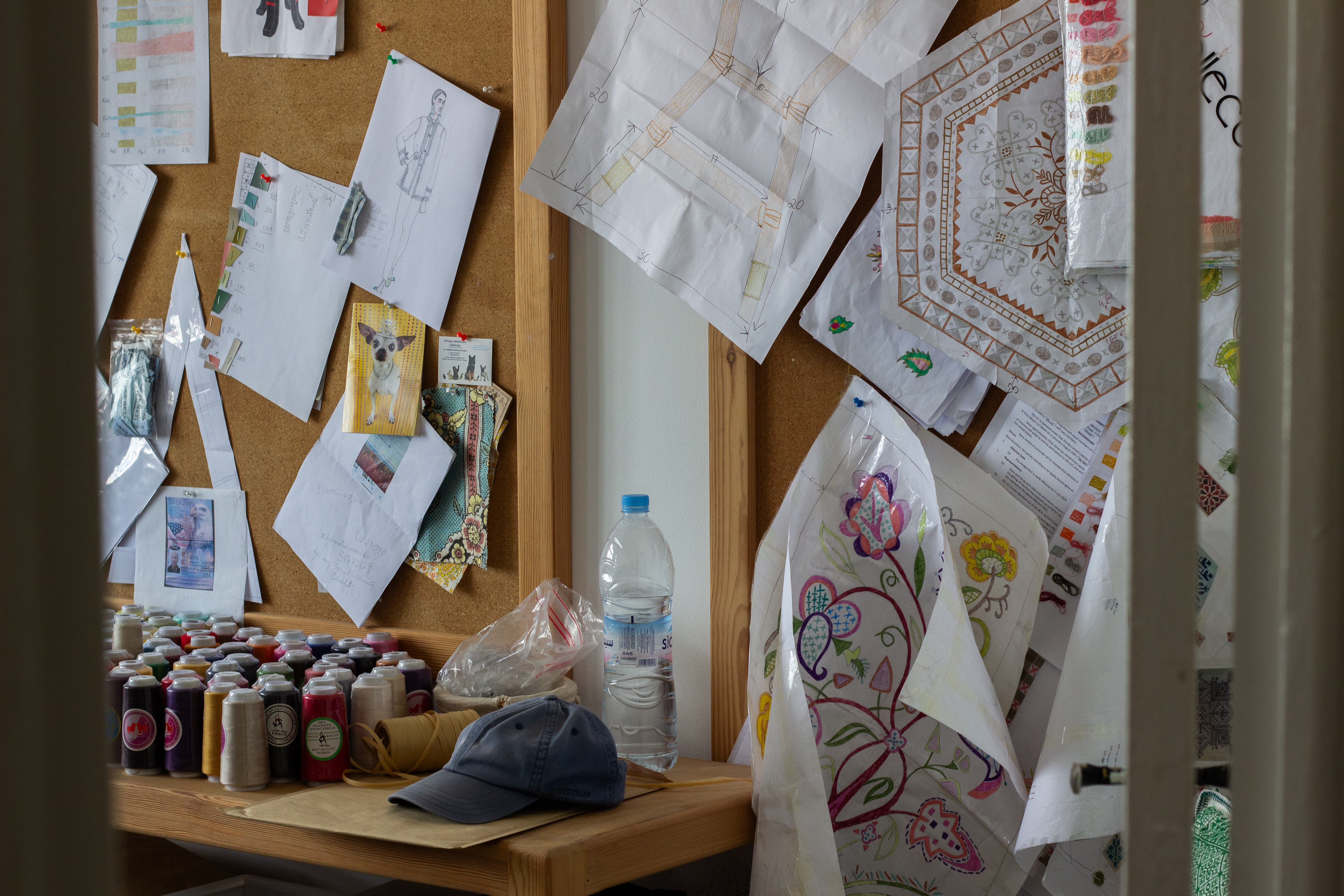
Habibi Burton studio space | Photo by Michalina Franasik
THF: And do you think that’s also tied to the desire for cultural relevance and history in design?
Gene & Frank: Absolutely. My background is more contemporary, I started out working for a very modern firm, but I’ve always loved art and antiques. And over time, I realised that this more layered, historic aesthetic is really where my heart is. I've travelled quite a lot, especially to places in Europe that show strong Arabic influence, like southern Italy, Portugal, and now here in Morocco. At first, I didn't even recognise those stylistic connections. I’d see tiles or arches and assume they were Spanish or Italian, not understanding the deeper Moroccan or Islamic roots behind them. But living here has opened our eyes to the richness of this cultural exchange, how centuries of movement, migration, and design influence are embedded in everything from architecture to textiles.
by Michalina Franasik - THF Communications Manager, Writer and Photographer
There are places in the world one might never visit were it not for coincidence, a personal recommendation, or a compelling story. Tangier is one of those places. Situated just across the Strait of Gibraltar, the city is visible from the mountains of Andalusia in southern Spain. A vibrant crossroads of cultures, Tangier is a city of hills, sun-washed yellows, striking blues, and deep greens. Overlooking the city is the Kasbah (from the Arabic "Khabba"), home to the Museum of Contemporary Art and the Kasbah Museum. The city’s aesthetic charm lies in its traditional zellige mosaic tiles, intricate wooden doorframes, and flowing arabesque forms, all testaments to its rich artisanal heritage. But we’re not touring Tangier today. Instead, we’re stepping into the life and work of two celebrated designers, Gene Meyer and Frank de Biasi who run a shop and studio in the city centre,where they collaborate closely with local craftspeople. Welcoming me into their studio space, they shared the story of how they fell in love with the city, a journey that began in New York and led them to relocate their life and work to this extraordinary corner of the world.
THF: When you first visited Tangier, what about it immediately captivated you and inspired your design aesthetic? How have those influences evolved since you moved there permanently?
Gene & Frank: When we first came here in 2001, and then again in 2002, we visited the city with a friend who had once been Frank’s assistant in New York. Her mother owned a house in the old mountain area, so we had the rare chance to explore the city with someone local. We were immediately drawn to the colourful characters and the city’s eccentric cultural scene, even though, at the time, we were living between New York and Paris. It sounds wild to say that a place could offer more than New York, but for us, Tangier did. It felt different. It felt exciting. It felt like something new.
In the 20th century, Tangier became a true melting pot of cultures, largely due to its unique international status. From 1923 to 1956, Morocco was governed by a mix of international powers, giving Tangier a cosmopolitan and almost surreal atmosphere.
Gene & Frank: When we asked a Moroccan friend what they thought about this period, they said: “It was a strange and fascinating time, not without its complications, but it gave Tangier a kind of openness and artistic energy that’s still felt today.”
This energy attracted artists, writers, and musicians from all over the world, even The Rolling Stones spent time here. Many of them were escaping the chaos of big city life and searching for something more intimate, more inspiring.
Café Baba — an iconic Tangier institution.With every sip of sweet mint tea, you can almost smell the lingering cigarette smoke and hear the whispers of The Rolling Stones echoing through the walls.
Photo by Michalina Franasik
Gene & Frank: Tangier is also only a two-hour train from Casablanca and five hours from Marrakech, both important cultural hubs in their own right. European artists and designers often came through these cities, drawing inspiration and frequently giving back, buying and renovating homes, supporting local artisans and businesses. Just look at the legacy of Pierre Bergé and Yves Saint Laurent, who founded Jardin Majorelle in Marrakech, still one of the most breathtaking places, colour-wise, I’ve ever experienced. Sometimes I still dream about the contrast of that deep Klein Blue set against vibrant yellows and fiery oranges.
We met Pierre Bergé a few times; he was much older by then, but we were very fortunate, as close friends from New York rented Villa Mabrouka, which was initially purchased by Yves Saint Laurent and Pierre Bergé in 1997 and transformed into the “House of Luck,” with interiors designed by Jacques Grange — where they lived for seven years.
Colours that inspired many, encountered on the streets | Photo by Michalina Franasik Today, with the development of 1-54 Marrakech, the art fair continues to encourage people to experience its unique landscape firsthand. In the case of Tangier, Casablanca may have had a slightly greater influence, as it was home to the Beat Generation of creatives. This literary subculture intersected with the Casablanca School of painters, including figures such as Hassan Hajjaj and Mohammed Melehi, whose work continues to inspire artists to this day.
THF: All those historical influences can still be felt today, even though Tangier had, in some ways, faded from the spotlight over the past 20 years. Now it seems to be rediscovered again. What characteristic do you think Tangier has that cities like New York or Paris do not?
Gene & Frank: Having lived and run a business in New York for many years, we met countless creative and inspiring people. But when we first came to Tangier, we discovered something different, a small but devoted community of eccentrics, designers, and creatives, much like ourselves. Tangier is where the Mediterranean meets the Atlantic, and where Europe meets Africa. That convergence brings a depth of influence, of layered history, of overlapping identities, all of which fuel a unique kind of energy. You feel it in the conversations, the aesthetics, the way people live. During our first week in the city, we went to 6 events, all in one week, and met so many people who remain close friends to this day, even 20 years later.
One night, we wore traditional Moroccan caftans. We looked at each other and thought: “We’ve never felt more like ourselves, never felt more like we were in the right place.”
That moment sealed it. We knew we had fallen in love with Tangier and that we wanted to stay longer, maybe even permanently. To this day, we can't fully explain what exactly captivated us. Perhaps it was the rhythm of the place, the colours, the light, the sense of possibility. But one thing is certain: the incredibly warm welcome we received, from both the expat community and our Moroccan neighbours, played a huge part in making Tangier feel like home.
THF: You’ve undertaken two major house renovations in Tangier. How did the challenges of working from New York shape the renovation of your first house, and how did being in Tangier for the second one change the process?
Gene & Frank: We bought our first house in 2007. At the time, it was essentially just a shell, it had been used as a mosaic studio, so while the structure was good, there wasn’t much else in place. Since we were still living between Paris and New York, there was no urgency to finish it. We took our time, over 10 years, in fact, slowly renovating the space. I was still running my interior design firm in New York, so I had my team, architects and designers, draw up the plans. We sent them over, and the local craftsmen executed the work beautifully. The plaster workers, woodworkers, and metal artisans in Tangier are truly exceptional.
By 2018, the house was finally finished, and we decided to make the move from New York. We shipped over our furniture, which filled maybe 30 or 40% of the space. The rest were sourced locally, either made by hand or found through antique dealers in Fez and Marrakech. Then, in 2019, we had the opportunity to purchase the neighbouring houses. They were completely in ruins, just rubble. So we started from scratch and built an addition to our existing home, extending it in the same architectural style and continuing our aesthetic journey. The design of both homes reflects our personal style, a mix of collecting, travel, and our life experiences, but also draws deeply from Northern Moroccan design traditions. Living here and meeting people with incredible homes was hugely influential. We wanted a blend of Moroccan and Western influences, something that reflected the life we were used to, but rooted in the culture we were now immersed in.
Frank's and Rene's home featured also in House & Garden, see more here.
Photo by Gene Meyer
The second renovation was much more Moroccan in spirit. By then, we had built relationships with local antique dealers, and we started incorporating antique ceilings, doors, window frames, tiles, everything we could find. It was a joyful process. If we had to pick favourite elements in our homes, we'd say two stand out: first, the fabrics, especially the embroidered ones we design and often create from scratch; and second, the painted woodwork.
THF: Can you share more about the vision behind Habibi Burton and how it reflects both your respect for traditional Moroccan craftsmanship and your desire to create a global brand?
Gene & Frank: One thing we love doing, and which is quite rare, is combining multiple crafts into a single piece. For example, a wooden object might be carved by one artisan, painted by another, and stencilled by yet another. It's a complex process, but the layering of techniques creates something unique.
For fabrics, we often start from raw material, then quilt, embroider, or dye it, and finally turn it into something like curtains. Sometimes we’re working with three or four different craftspeople just to produce one finished piece. But each item tells a story. We can walk through our home and point to any object and say exactly who made it, where the inspiration came from, how long it took, and what made it special. And that’s what people are looking for, especially at a great fair like Treasure House. You’re not buying your entire home at a fair, but you're discovering one or two special pieces that spark conversation. Something you bring home and friends ask, “Wow, where did you find that?” That’s what makes a fair like Treasure House, and a shop like ours, so meaningful.
Habibi Burton studio space | Photo by Michalina Franasik
THF: And do you think that’s also tied to the desire for cultural relevance and history in design?
Gene & Frank: Absolutely. My background is more contemporary, I started out working for a very modern firm, but I’ve always loved art and antiques. And over time, I realised that this more layered, historic aesthetic is really where my heart is. I've travelled quite a lot, especially to places in Europe that show strong Arabic influence, like southern Italy, Portugal, and now here in Morocco. At first, I didn't even recognise those stylistic connections. I’d see tiles or arches and assume they were Spanish or Italian, not understanding the deeper Moroccan or Islamic roots behind them. But living here has opened our eyes to the richness of this cultural exchange, how centuries of movement, migration, and design influence are embedded in everything from architecture to textiles.